
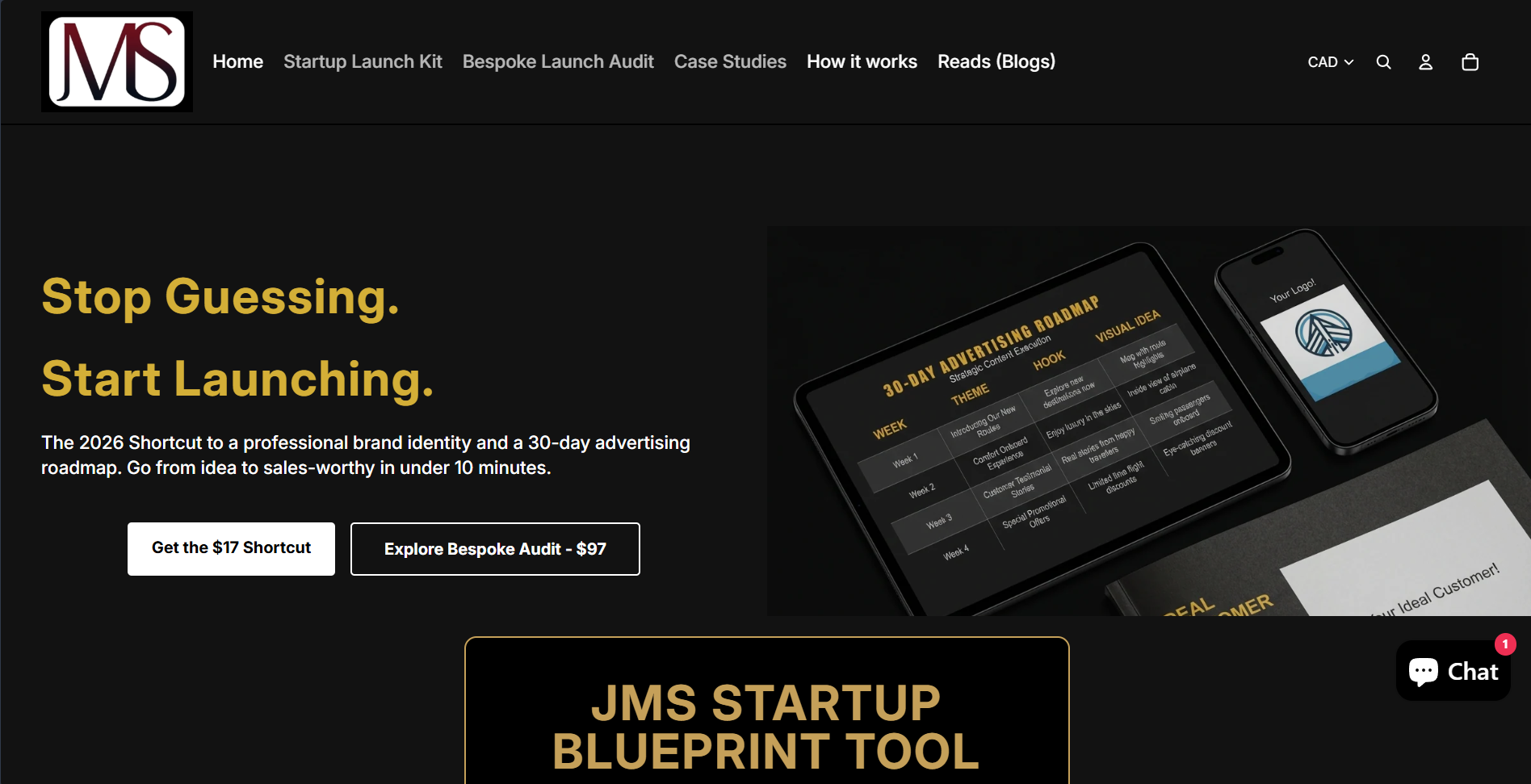
For most founders, branding is not a priority until it becomes a problem.
You start building, validating, and trying to get something out into the market. Then you hit a wall. The product might be ready, but the brand is not. And fixing that usually means dealing with long agency timelines, unclear deliverables, and high costs.
JMS Logos takes a different route.
Instead of treating branding as a creative service, it treats it as a system that can be built, structured, and executed quickly.
The Cost of Waiting to Launch
The idea behind JMS Logos came from a pattern the founders kept seeing.
Early-stage builders would lose momentum during what they call the “8-Month Slump.” This is the period where progress slows down, not because of lack of ideas, but because execution gets blocked by things like branding.
Agencies take time. Deliverables are often vague. And for founders trying to move fast, waiting weeks for “brand direction” is not practical. The result is delay. And in early-stage environments, delay often means lost opportunity.
From Guesswork to Structured Output
The project started at the University of Ottawa with a simple observation. Branding is usually treated as subjective. But a large part of it is actually driven by positioning, market gaps, and competitive signals.
Instead of guessing, the team approached it like an engineering problem.
They built a logic system designed to process large amounts of structured input and output a clear brand direction. Over 500 hours went into developing an engine that works through tens of thousands of tokens to generate consistent results.
The goal was not just to create visuals, but to produce something founders can act on immediately.
What the Product Actually Delivers
JMS Logos is not positioned as a logo generator.
It functions more like a technical branding engine that outputs:
A complete brand direction
Visual identity elements
A structured roadmap for launch
Positioning insights based on market data
The core product, referred to as the roadmap, is designed to act as a starting point for the first 30 days of market entry. This shifts the value from design alone to execution guidance.
Why It Stands Out
Most tools in this space focus on speed or aesthetics.
JMS Logos focuses on structure.
The key difference is the audit layer. Instead of generating random outputs, the system analyzes positioning and competitive space before producing results.
For founders, this means the output is not just something that looks good, but something that is aligned with how they enter the market.
Built for Speed-Driven Founders
The product is aimed at a specific type of user. Founders who want to move from idea to launch quickly.
If the goal is to start selling within days, not months, then waiting on traditional branding processes becomes a bottleneck. JMS Logos is built for that “Day 1” mindset where speed and clarity matter more than perfection.
The Feature That Defines It
One part of the system stands out. The Bespoke Launch Audit.
This is where the engine generates a structured strategy that would normally take a consultant significant time to produce. It connects branding decisions with actual go-to-market actions.
For the team, this is proof that structured systems can replace a large part of the manual branding process.
What Building Looks Like Right Now
Development is happening in parallel with real-world testing. The team is balancing university work while pushing the product forward. They are currently in a phase where they are actively launching demo startups to test the system across different niches.
In one instance, they deployed five startups within 24 hours to validate how the engine performs under pressure. This approach keeps the focus on output, not just theory.
What’s Next for the Engine
The current focus is on improving the depth of the system. This includes expanding the logic to incorporate more competitive data and refining how the engine analyzes positioning.
The long-term goal is to make the output comparable to having a high-level marketing strategist available on demand, but at a much lower cost.
Why This Approach Matters
Early-stage execution is often limited by time and resources.
Branding, while important, should not slow down the process.
By turning branding into a structured, repeatable system, tools like JMS Logos reduce one of the common bottlenecks founders face. It allows builders to move forward without waiting on external dependencies.
Try JMS Logos
If you are working on a new idea and want to move from concept to launch quickly, you can test the engine here:
JMS Logos is built around a simple idea.
Execution improves when the process is structured.
READY TO JOIN BUSINNECT?
If this story resonated with you and you are thinking about joining a community of builders, freelancers, founders, and professionals who are serious about making real connections, this is your sign.
Businnect is free to sign up. You can explore communities, join conversations, and discover opportunities without spending anything. When you are ready to go further and get verified, the option is there.
Use the link below to create your account:
More posts
Una plataforma para fundadores, inversores y profesionales — Businnect. Empieza gratis hoy en businnect.com
# Por qué Businnect — Donde fundadores y profesionales verificados de verdad se conectan Una plataforma para fundadores, inversores y profesionales — Businn...
Uma plataforma para fundadores, investidores e profissionais — Businnect. Comece gratuitamente hoje em businnect.com.
# Por que a Businnect — Onde fundadores e profissionais verificados realmente se conectam Uma plataforma para fundadores, investidores e profissionais — Bus...
A platform for founders, investors, and professionals — Businnect. Start free today at businnect.com
Why Businnect — Where Verified Founders and Professionals Actually Connect ## What You Learn Once You've Run a Business Whether it's a business or a startu...
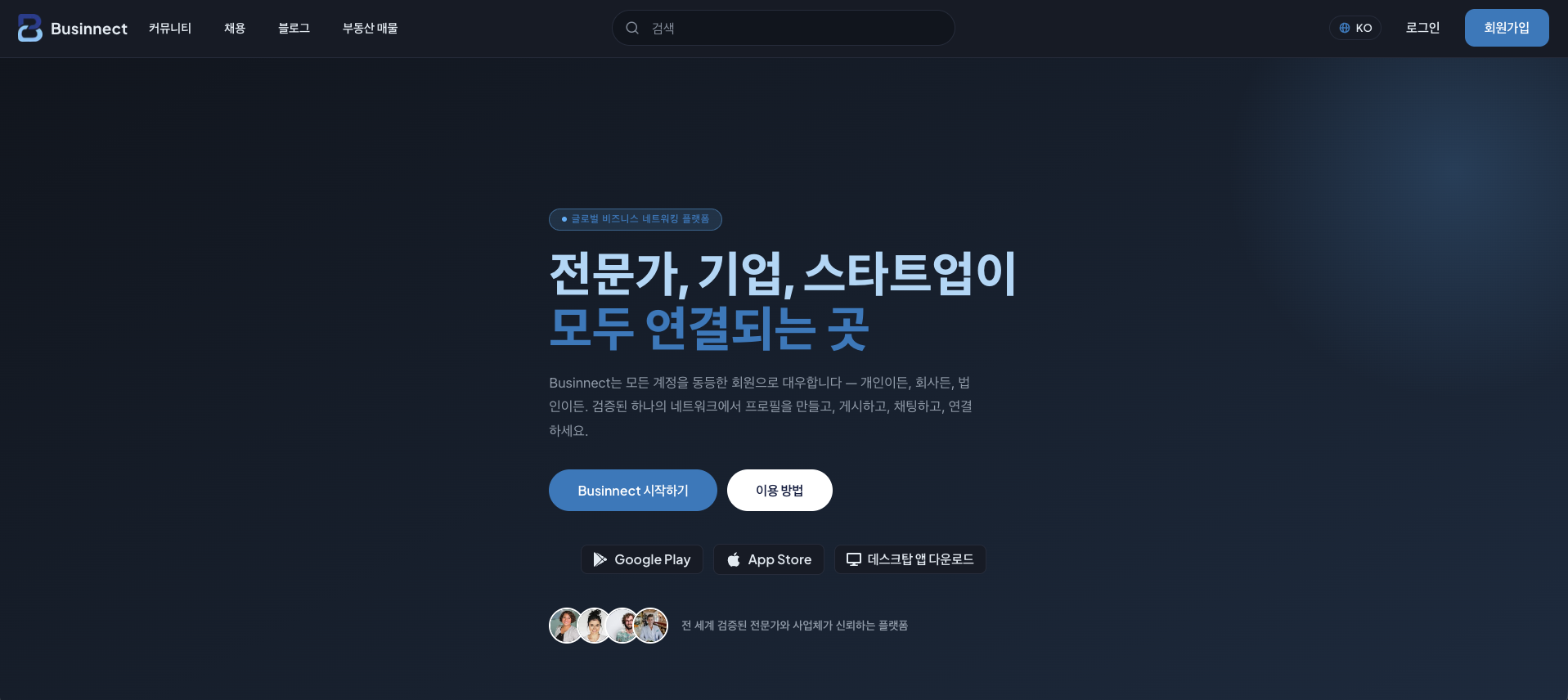
사업가·투자자·전문가를 위한 플랫폼, Businnect — 지금 businnect.com에서 무료로 시작하세요
왜 Businnect인가 — 검증된 사업가, 전문가들이 소통하는 곳 ## 사업을 해보면, 누구나 알게 되는 것 사업이든 스타트업이든, 해보면 결국 사람이 전부라는 걸 알게 됩니다. 좋은 동료 하나, 좋은 파트너 하나, 좋은 투자자 하나, 실력 있는 개발자 한 명이 회사의 방향을...
Businnect 소개 — 사업주와 검증된 전문가를 위한 비즈니스 네트워크
링크드인에 사람은 수천 명 연결돼 있는데, 정작 일로 이어진 인연은 손에 꼽습니다. 사업주로서 모임에 나가 명함을 주고받고, 인사를 나누고, 그걸로 끝. 네트워크는 계속 늘어나는데 기회는 늘지 않습니다. 한 번쯤 겪어보셨을 겁니다. 그리고 이게 개인의 게으름 때문이 아니라는 것도...
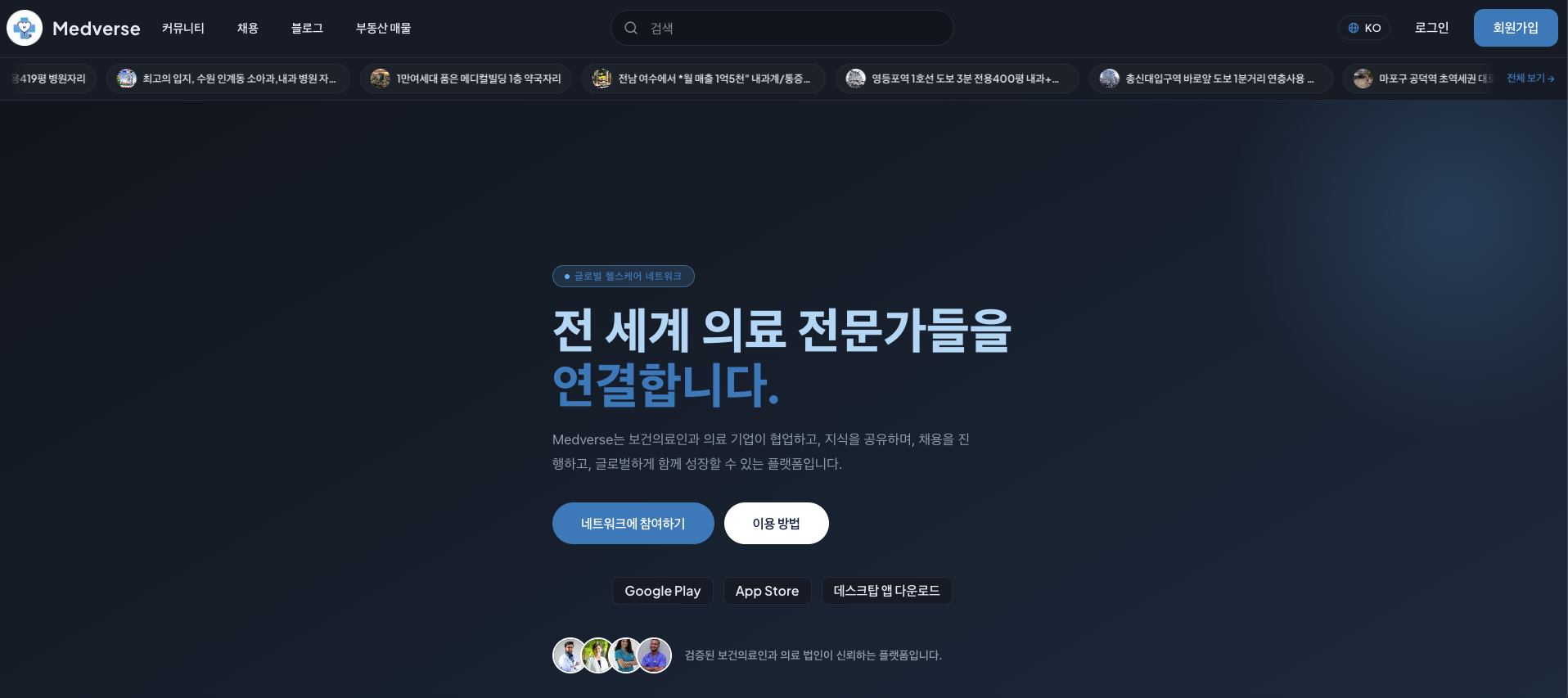
모든 보건의료인을 위한 플랫폼, 메디버스 - 지금 medverse.com에서 무료로 시작하세요
왜 메디버스인가 — 의료는 보건의료인 혼자 하는 일이 아닙니다 ## 메디버스를 시작한 이유 저희가 만들고 싶었던 건 단순합니다. 보건의료인, 의료법인과 기관, 그리고 그들을 둘러싼 사람들 — 공인중개사부터 제약회사, 개발자까지 — 이 한자리에서 서로 소통하는 공간. 그런데 막...