
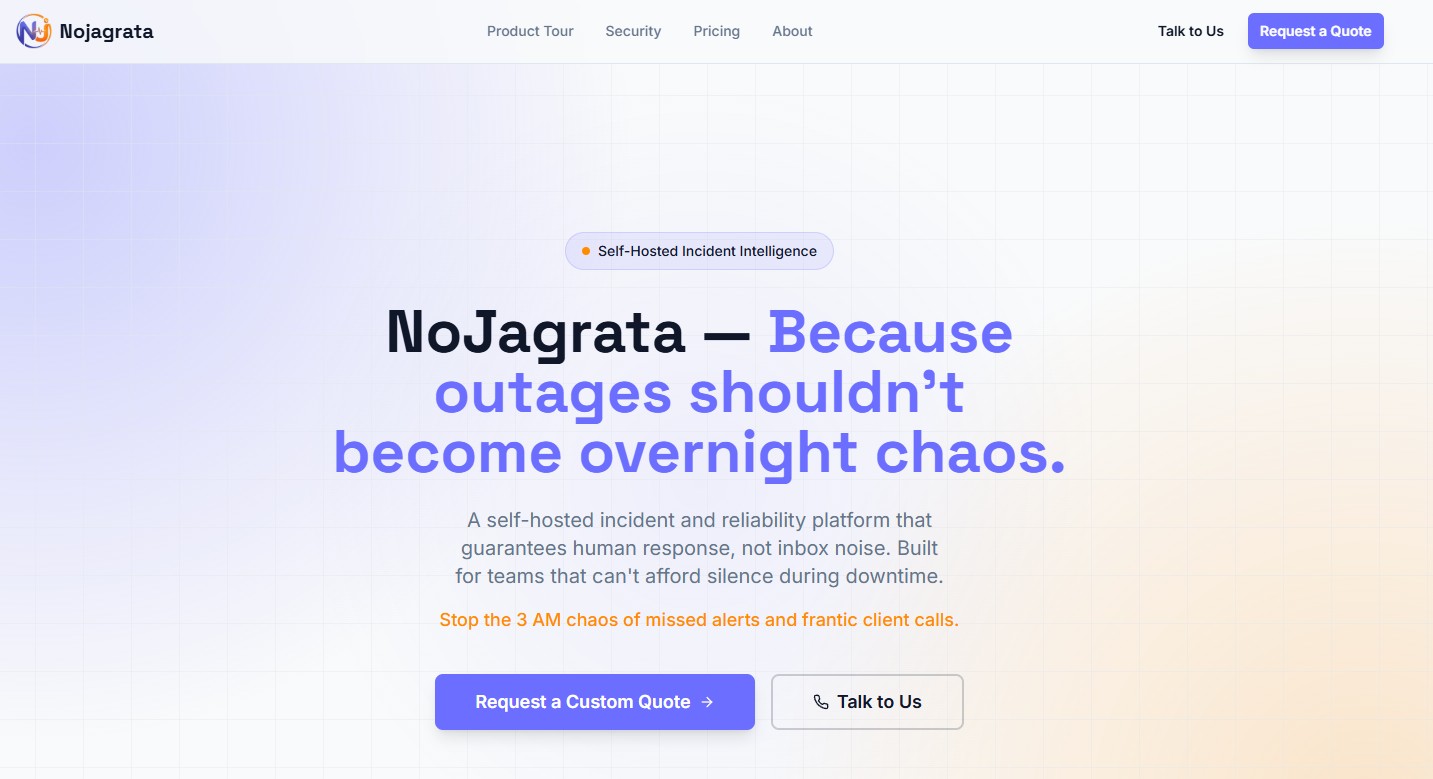
Downtime doesn’t just break systems. It damages trust, costs money, and puts client relationships at risk. Nojagrata was created to solve that exact problem, starting from a real incident that exposed how fragile most alerting setups can be.
Today, it has evolved into a self-hosted on-call incident management tool designed for service-based companies handling client infrastructure. The focus is simple: make sure critical issues never go unnoticed.
Where It Started
The origin of Nojagrata is not theoretical. It came from a failed moment.
A client’s server went down in the middle of the night. No alerts were triggered. The issue was only discovered after an angry phone call and a demand for compensation. That one incident led to a basic heartbeat script that pinged a URL.
Over time, that script turned into something much more robust. After 18 months of internal use, the system has reached a point where “silent” downtime is no longer a concern. Even failures at the container or server level are detected and escalated.
What Nojagrata Actually Does
Nojagrata is not trying to compete as a full observability platform. It focuses on one thing and does it well: alerting the right people at the right time.
Key capabilities include:
On-call escalation with SMS and call alerts using Twilio, moving from developer to team lead to management if needed
Heartbeat monitoring for servers and serverless services
Error tracking tied directly to GitHub or GitLab commits
Domain and subdomain expiry alerts
Custom notifications from AWS or other systems
Server restart detection with detailed alerts
The goal is to ensure that when something breaks, it is seen, understood, and acted on immediately.
The Hardest Problem to Solve
Building a simple monitoring script is straightforward. Building a reliable escalation system is not.
The biggest challenge was creating logic that works across time zones, different failure scenarios, and high-pressure situations. Alerting one person is easy. Making sure the alert reaches someone who will act is much harder.
There were long nights spent testing whether the Twilio-based escalation would hold during real incidents. Over time, with continuous internal testing, the system proved stable under pressure.
Why Teams Choose Nojagrata
Most tools in this space aim to be everything at once. That often leads to complexity and higher costs.
Nojagrata takes a different route. It strips away unnecessary features and focuses only on high-fidelity alerting and human acknowledgment. It is lightweight, self-hosted, and built for teams that do not want to pay for features they will never use.
Because it is self-hosted, your data always stays within your own servers. You are not relying on third-party platforms to store or manage critical infrastructure information, which adds an extra layer of control and security for teams handling sensitive systems.
This makes it especially relevant for agencies and service providers where margins matter and uptime is critical.
Built for High-Stakes Environments
The product is designed for a specific type of user:
Agencies managing multiple client projects
Service-based companies handling production systems
Teams where downtime directly impacts revenue or reputation
If missing an alert means losing a client or paying penalties, Nojagrata becomes a practical safeguard.
A Feature That Stands Out
One of the most valuable parts of the system is its contextual error reporting.
When something fails, Nojagrata does more than send a notification. It captures the stack trace, links it to the exact GitHub or GitLab commit, and identifies the likely source of the issue. Even in cases where a container crashes and restarts silently, the system preserves the context needed to fix the root cause.
This reduces time spent debugging and prevents recurring issues from being ignored.
Behind the Build
Nojagrata is being developed alongside a full-time job. Weekdays are spent working in a service-based company, while weekends are dedicated to improving the product, reaching out to potential users, and refining the experience based on feedback.
This pace keeps development grounded in real-world use cases rather than assumptions.
What’s Being Improved Right Now
The current focus is on scalability and usability.
Strengthening system design to handle more users and larger workloads
Simplifying the self-hosted deployment process with a goal of a 5-minute setup
Gathering feedback from early users and pilot customers
The aim is to make the tool reliable and easy to adopt without requiring complex setup.
The Meaning Behind the Name
“Nojagrata” carries a practical meaning.
“Jagrata” in Hindi refers to staying awake through the night. The idea behind Nojagrata is the opposite. You should not have to stay up worrying about systems breaking. The platform monitors everything for you, escalates issues when needed, and ensures that problems are handled without constant manual oversight.
The goal is simple: fewer sleepless nights, without sacrificing reliability.
Where to Explore Nojagrata
You can learn more or try it at nojagrata.com. For direct inquiries, outreach is also open via info@nojagrata.com.
The current focus is on working closely with early users, especially teams managing multiple client systems who need a dependable alerting setup.
Final Thoughts
Nojagrata is not trying to be the biggest tool in the space. It is trying to be the one that works when it matters most. When systems fail, speed and clarity are everything. Tools either help in that moment or get in the way. Nojagrata is built to make sure it never becomes the latter.
More posts

Businnect 소개 — 사업주와 검증된 전문가를 위한 비즈니스 네트워크
링크드인에 사람은 수천 명 연결돼 있는데, 정작 일로 이어진 인연은 손에 꼽습니다. 사업주로서 모임에 나가 명함을 주고받고, 인사를 나누고, 그걸로 끝. 네트워크는 계속 늘어나는데 기회는 늘지 않습니다. 한 번쯤 겪어보셨을 겁니다. 그리고 이게 개인의 게으름 때문이 아니라는 것도...
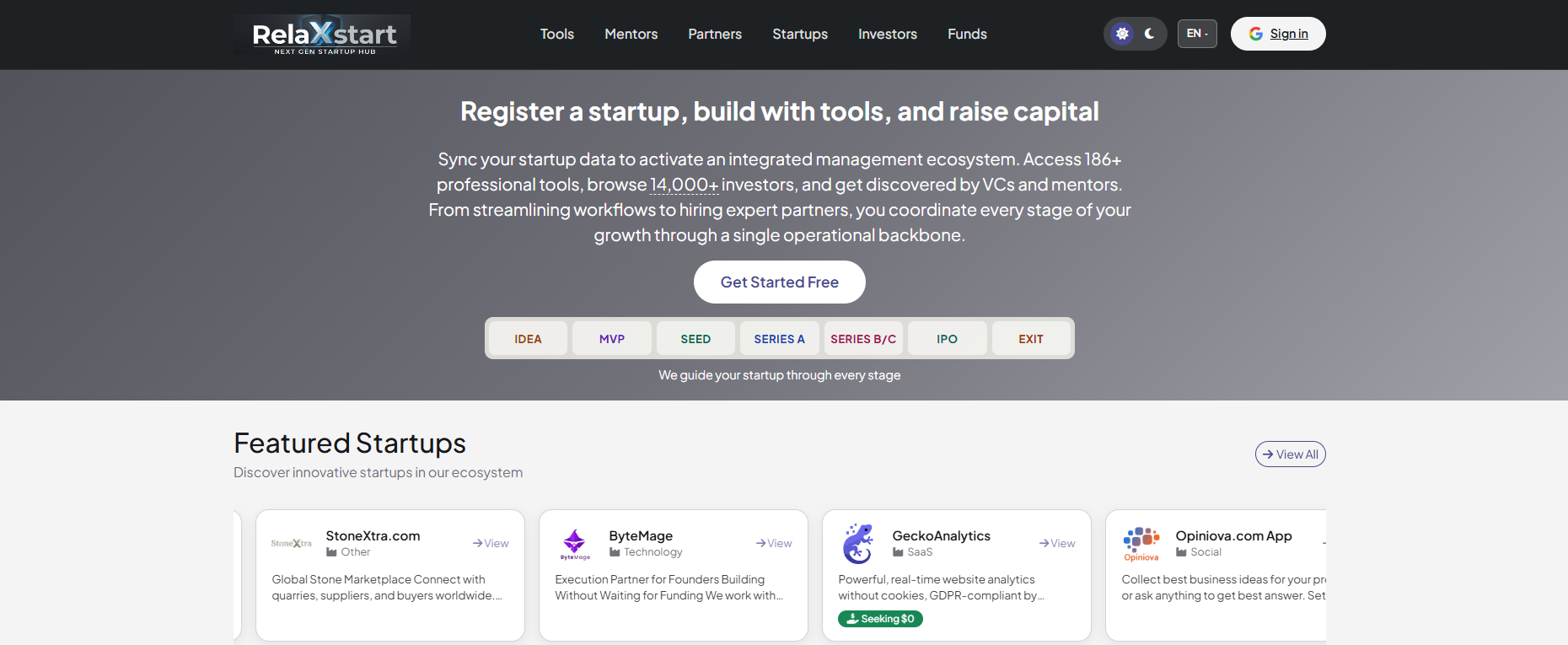
Why Startups Fail From Backend Chaos And How RelaXstart Brings Structure, Clarity, and Investor Readiness
Why Startups Fail From Backend Chaos And How RelaXstart Brings Structure, Clarity, and Investor Readiness Many startups fail not because of bad products but...
Why Most Marketing Agencies Fail Early Brands — And How a Consultant-Led Approach Builds Real Growth
Why Most Marketing Agencies Fail Early Brands — And How a Consultant-Led Approach Builds Real Growth Many early-stage brands struggle with rigid marketing p...
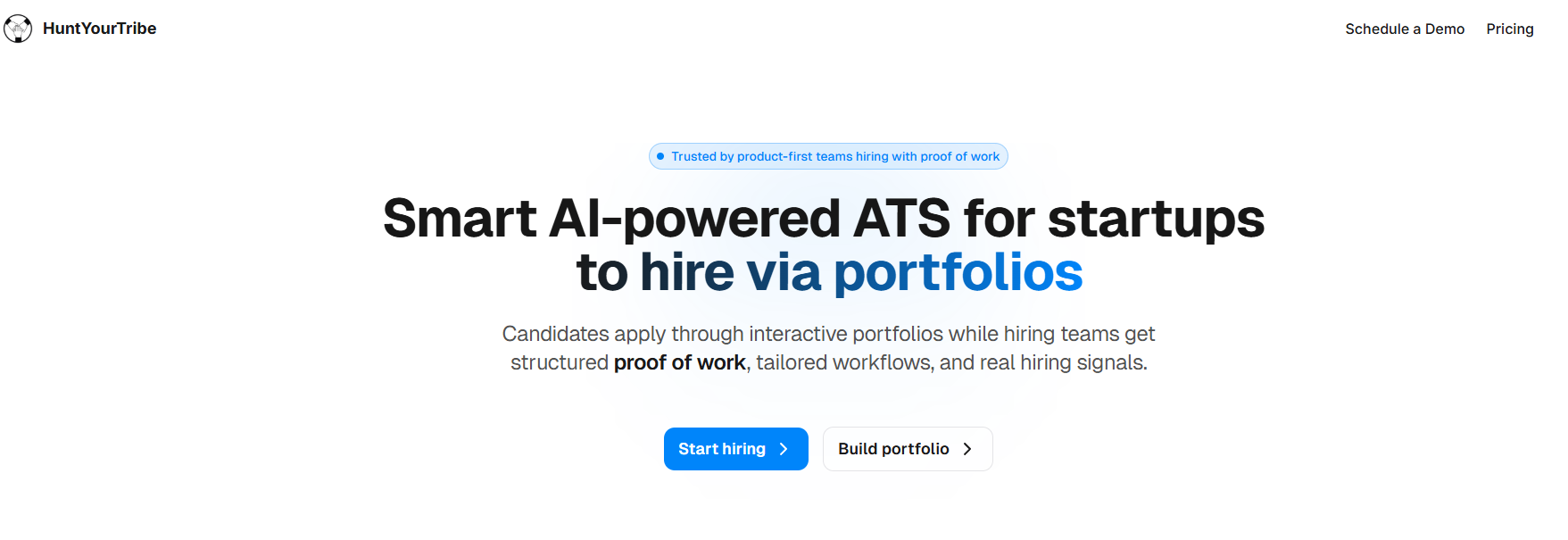
Why Resume-Based Hiring Is Failing Startups And How HuntYourTribe’s Portfolio-First ATS Fixes It
Why Resume-Based Hiring Is Failing Startups And How HuntYourTribe’s Portfolio-First ATS Fixes It Traditional ATS tools rely on resumes and keywords, causing...
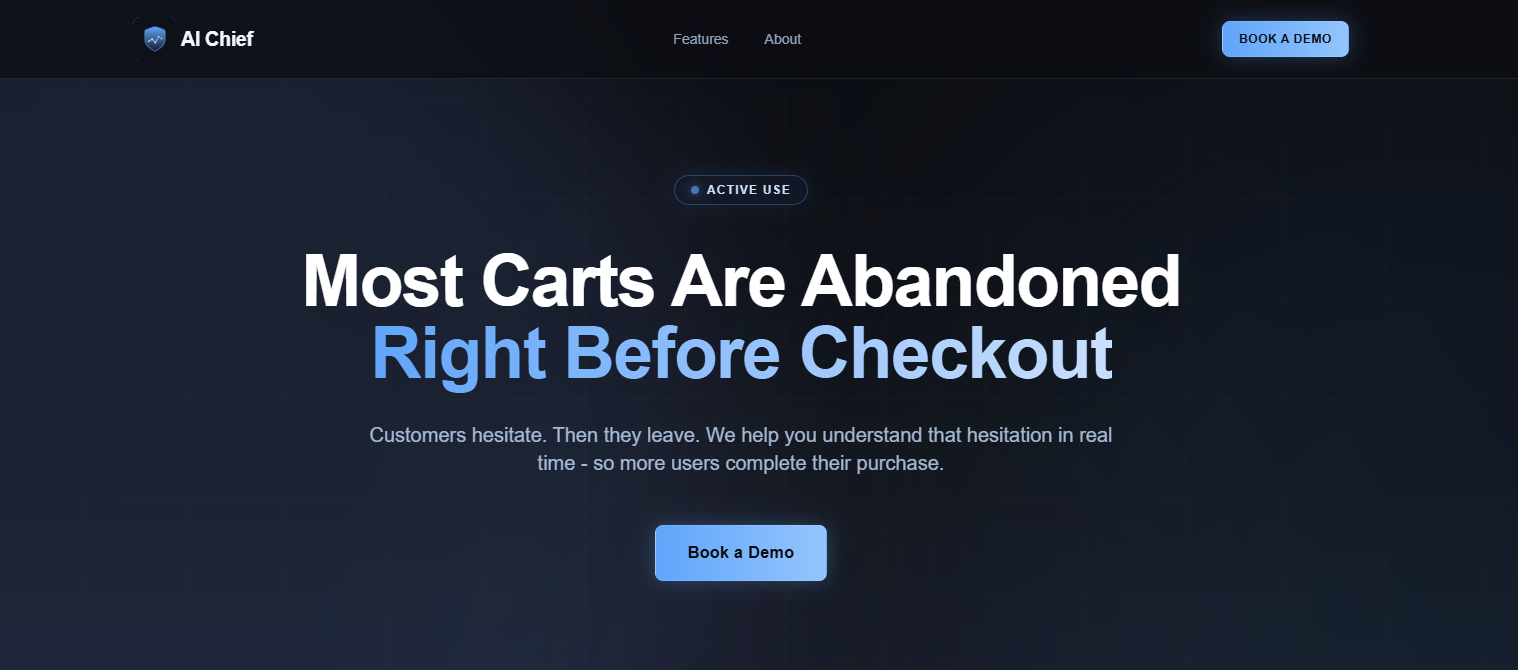
Cart Abandonment Is Costing You Millions: How AI Chief Uses Real-Time Decision Intelligence to Recover Lost D2C Revenue
Why Your D2C Brand Is Losing Sales at Checkout — And How AI-Powered Conversion Intelligence Fixes It Over 70% of online shoppers abandon their carts before...
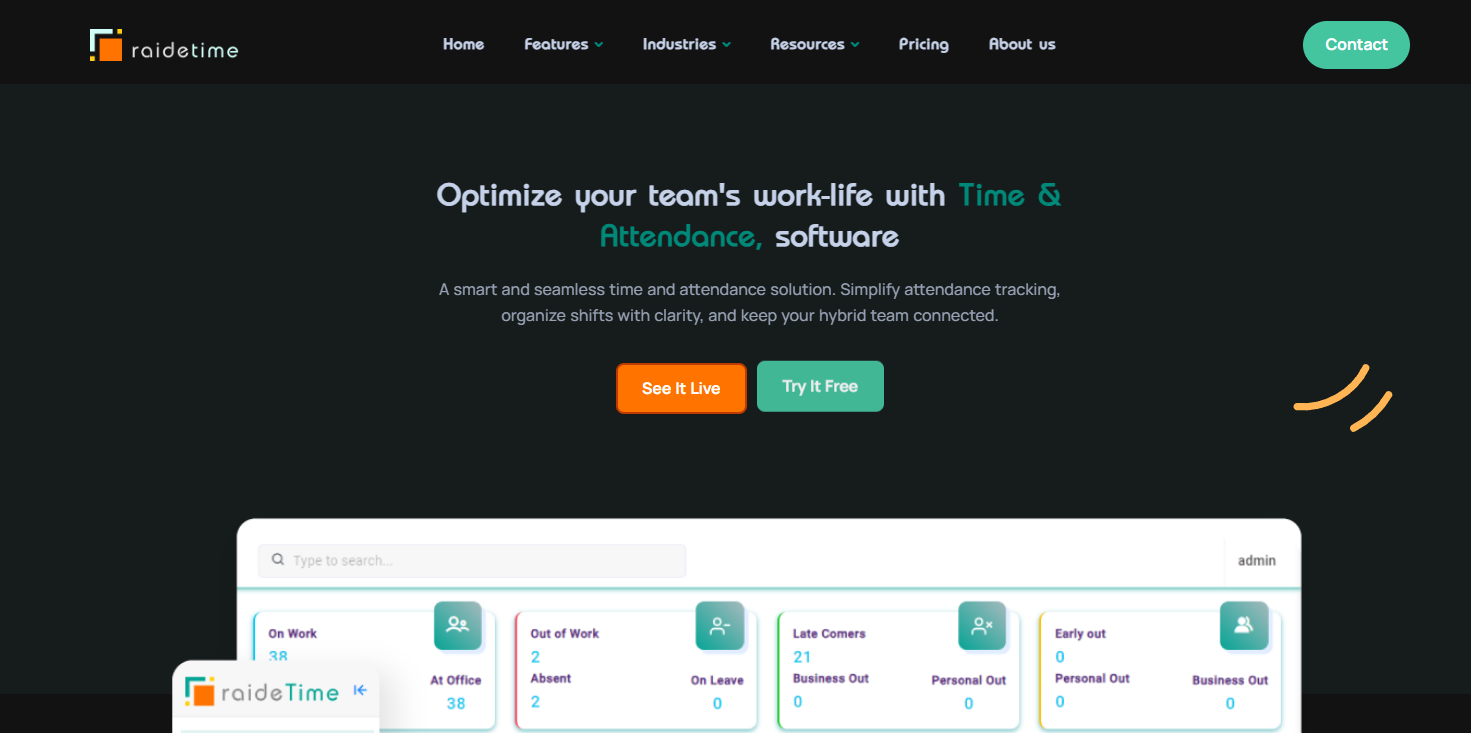
Raidetime: Bringing Real-Time Attendance Tracking to Distributed Teams
Managing attendance sounds simple until teams are spread across multiple locations. For many medium-sized enterprises, especially those with field staff or...